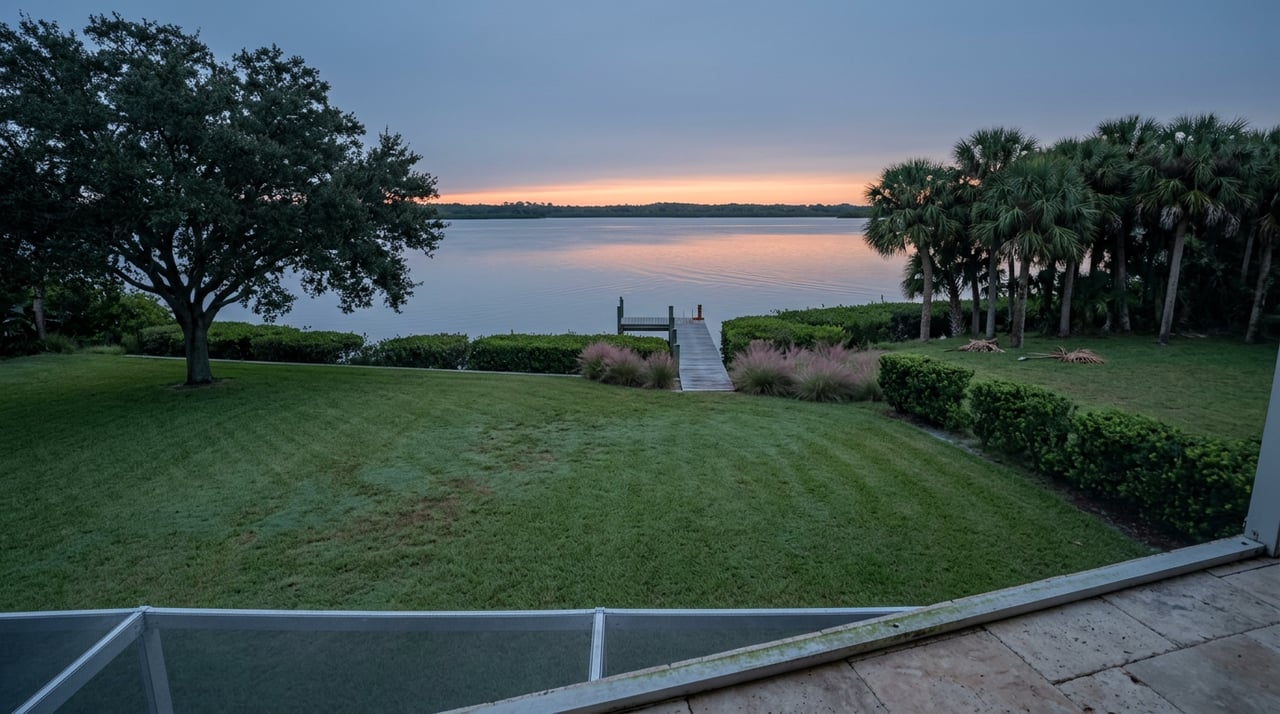
The wind quits first. Sometime in the first two weeks of October, the afternoon chop that's been slapping against the seawalls since June starts easing off, and the Indian River Lagoon settles into the kind of glassy stillness that makes a kayak feel less like work and more like sitting still. If you live on Wabasso Island, you've felt this shift before even if you've never thought about why it happens on schedule every year.
Around the same week, a second seasonal marker shows up on every seafood counter in the state: stone crab season opens. The two events land close enough together that it's easy to lump them into one general "fall has arrived" feeling. They're not the same kind of event at all, and knowing the difference tells you something real about which parts of this season actually belong to the water outside your door.
The Wind Finally Lets Go
Summer paddling on the Indian River Lagoon isn't bad, it's just compromised. The heat sits heavy by mid-morning, afternoon storms build fast off the interior, and the water carries a haze that makes wildlife harder to spot. Regional paddling guides consistently mark October through May as the better window, with the calmest conditions clustering in the early morning just after sunrise, when winds are lightest and incoming tides help rather than fight you.
That morning window doesn't disappear once winter arrives. What changes is the afternoon. Cold fronts moving through in December and January tend to kick up stronger afternoon breezes than the lagoon sees in October, which is part of why longtime paddlers treat the first six weeks of fall as the sweet spot: warm water, cooling air, and wind that hasn't yet learned to punish you for sleeping past 8 a.m.
Four Lobes, One Causeway
If you've launched from Wabasso Causeway Park before, you may have only ever used the one corner you already know. The park runs 13.4 acres across four separate lobes strung along the causeway, and they don't all do the same job.
- The southeast lobe carries the boat launch and the only restroom facility on site
- The other lobes split between picnic pavilions, grills, and shoreline built for fishing, canoe launching, and sunbathing rather than trailer traffic
- The park is open daily from 7 a.m. to sunset, with no pets, alcohol, or open fires permitted under county park rules
That layout matters if you're paddling rather than trailering a boat. The quieter lobes away from the ramp give you a calmer put-in and put you closer to the mangrove shoreline where the birdlife concentrates. Regional guides consistently point to Wabasso Causeway as a reliable spot for heron, egret, and roseate spoonbill sightings, and the causeway's design, with launch points on both ends of the bridge, means you can usually find a lee side no matter which way the wind is blowing that day.
Who's Already on the Water
You don't have to own a kayak to use any of this. Paddles By The Sea runs its main operation from a riverside location on Orchid Island but delivers kayaks directly to Wabasso and other launch points across Indian River County, which means the boat can show up before you do. Sea Sup Go Paddle & Surf Company works the same stretch with guided and self-guided kayak and paddleboard tours. If you'd rather have someone explain what you're looking at, the Environmental Learning Center runs guided paddle excursions for a flat rate covering a two-hour trip, on top of straightforward self-guided rentals for anyone who just wants the gear and a launch point.
None of this requires driving south into downtown Vero Beach. It's the kind of infrastructure that exists specifically because this stretch of the lagoon, from Wabasso down through Round Island, draws paddlers who live along it rather than tourists passing through.
If you're weighing where to put in on a given morning, the differences between the three closest options are worth knowing:
| Launch Point | Best For | Watch For |
|---|---|---|
| Wabasso Causeway Park | Protected paddling on either side of the bridge, frequent bird sightings | Boat traffic near the ramp lobe during peak fishing hours |
| MacWilliam Park (Merrill P. Barber Bridge) | Quick access to the Intracoastal, popular put-in for locals | Manatee zone on the bridge's north side means slower boat speeds and smaller wake, which is good for paddlers but slows crossing traffic |
| Round Island State Park | Clear water, small islands, strong fishing near Coon Island | Roughly a 7.5-mile drive south on A1A from the causeway |
The Claw That Isn't Local
Here's where the fall calendar gets misleading. Florida's stone crab season opens October 15 this year and runs through May 1, 2027, a date set by the Florida Fish and Wildlife Conservation Commission and applied statewide. It's a real regulatory event, tied to a genuinely interesting harvest method: fishermen can only take the claw, not the whole crab, and the animal goes back into the water where it regenerates the lost limb in about a year and a half. Claws have to clear a minimum size before they can legally be kept, egg-bearing females are off limits, and recreational harvesters need a no-cost trap registration before they set a single trap.
What that date doesn't tell you is where the crab on your table actually came from. Stone crabs range as far north as the Carolinas, but the commercial fishery is concentrated almost entirely in Florida, and the bulk of that harvest happens well south of here, from the Gulf flats around Sarasota down to the Atlantic docks near Fort Lauderdale. The Indian River Lagoon along Wabasso Island isn't part of that working fishery. So when the claws show up at the fish market this month and every neighbor within walking distance starts cracking shells with a mustard sauce, that catch traveled a long way down the coast before it got here. October 15 is a real date. It's just not a local one.
What's Actually Yours This Fall
That's the distinction worth sitting with. The lagoon calming down, the causeway's four lobes filling back up with paddlers, the outfitters delivering kayaks to your dock instead of you driving to theirs, that's the water outside your house doing something specific and seasonal that you can watch happen in real time. Stone crab season is a statewide fixture that happens to land on the calendar around the same week, borrowed from a fishery hundreds of miles south.
Both are worth marking. Only one of them is actually about this stretch of A1A. If you're new to the area and trying to figure out which parts of the "Florida fall" narrative apply specifically to where you live, that's usually the test: does the thing happening trace back to the water you can see from your porch, or is it a statewide headline that happens to have good timing.
If you're thinking about what else is specific to life on this part of the barrier island, from the daily rhythm of the causeway to how the neighborhood holds up across a full year, Janyne Kenworthy has spent decades paying attention to exactly this kind of detail. Let's connect if you'd like a longer conversation about what makes Wabasso Island worth knowing this well.
This article is general information, not legal, tax or financial advice. Consult a qualified professional about your situation.
