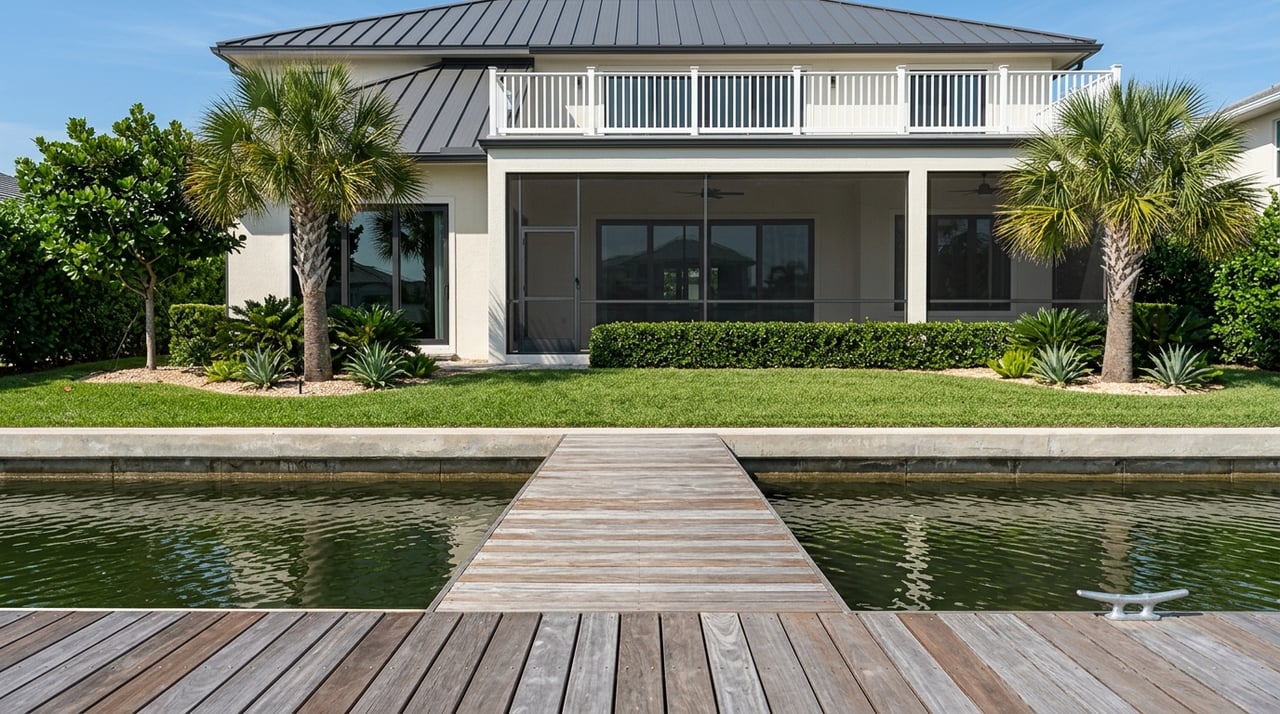
If you are thinking about buying in Ambersand Beach, the setting can be hard to ignore. This barrier-island stretch south of Sebastian Inlet offers a rare coastal feel, and in some cases, buyers may find parcels that relate to both the ocean and the lagoon. But this is also a place where erosion, permitting, flood risk, and lot details matter more than they do in many other markets. If you want to buy wisely, it helps to know what to verify before you fall in love with the view. Let’s dive in.
Ambersand Beach at a glance
Ambersand Beach is not a large, amenity-heavy beach community. Indian River County describes Ambersands Beach Access as a small 3-acre county beach park with about 110 lineal feet of shoreline, stabilized parking, and beach access within the Archie Carr National Wildlife Refuge.
The county also notes that the beach access is unguarded and has limited on-site improvements. Public access at 12566 North Highway A1A includes an unpaved parking area, boardwalk access, and hours from 7 a.m. to sunset. Rules prohibit pets, camping, overnight parking, open fires, and damage to the dunes.
That matters because buying here is often more about the parcel itself than a long list of neighborhood amenities. In Ambersand Beach, your ownership experience may be shaped as much by shoreline rules and site conditions as by the home.
Parcel types can vary
One of the most important things to understand is that Ambersand Beach is not a one-size-fits-all location. Some properties may be beach-oriented only, while others may have a more complex layout tied to both the ocean side and lagoon side.
Local reporting has described Ambersand Beach homes with river frontage across A1A, private docks, and ocean-to-river views. That means you may encounter anything from a straightforward coastal lot to a property with a much more layered ownership pattern and water-access story.
Because of that, you should verify exactly what is included in the legal parcel, what frontage you actually control, and how the lot is configured in relation to A1A, the beach, and the lagoon. What looks like an “ocean-to-river” opportunity at first glance may involve very specific title, access, and permitting questions.
Lot lines need close review
In Ambersand Beach, lot-line details are especially important. Indian River County’s zoning atlas notes that the Ambersand Beach plat is included and that distances east of A1A are measured to the mean high water line.
That may sound technical, but it has real buying implications. It can affect setback verification, usable site area, and your understanding of where improvements may or may not be possible.
Before you buy, make sure you review the survey, plat, zoning information, and current setback conditions carefully. In a coastal location like this, small measurement issues can turn into major planning issues later.
Coastal rules shape what you can do
Ambersand Beach sits in a highly regulated coastal environment. Florida DEP’s Strategic Beach Management Plan identifies this as a critically eroded barrier-island segment, and the county’s beach management guidance notes that erosion threatens private development along Ambersand Beach.
This is not just background information. It can influence maintenance expectations, shoreline management activity, and how future improvements are reviewed.
The area is also affected by the Coastal Construction Control Line, or CCCL. Florida DEP advises buyers and owners to check the official CCCL map before planning coastal construction, and the county zoning atlas also labels CCCL lines in the Ambersand area.
If you are considering renovations, additions, a new build, or site work, this is one of the first issues to review. A beautiful lot does not automatically mean an easy path to construction.
Expect permitting to be layered
In many coastal purchases, buyers focus on the home first and the permit path second. In Ambersand Beach, it is smarter to think about both at the same time.
Indian River County’s permit procedures show that permits can involve multiple departments, including Community Development, Public Works, Fire Prevention, Environmental Health, and DEP. The county also states that an application is not considered complete until all applicable reviews are approved.
The county’s Planning Division also offers a Planner of the Day to answer questions about zoning, setbacks, allowed uses, and permits. For a buyer, that is a useful reminder that due diligence should include direct verification, not assumptions based on listing language or neighboring properties.
Dock potential is never automatic
If you are drawn to a lagoon-side parcel or a property with water frontage, boating potential may be part of the appeal. That can be a real advantage here, especially since Sebastian Inlet State Park offers nearby boat ramps with access to the Indian River Lagoon, Intracoastal Waterway, Sebastian River, and the Atlantic Ocean.
Still, private dock rights and public boat access are not the same thing. A parcel can feel ideal for boating without already having approved dock rights or a simple path to permitting.
Florida DEP explains that some single-family docks may qualify for self-certification as exempt, while others may require verification, a general permit, or an individual environmental resource permit. DEP also notes that an individual ERP may authorize activities on state-owned submerged lands.
Its dock permitting guide makes clear that size, location, submerged lands, and sensitive resources can all affect the process. In short, if dock potential matters to you, treat it as a question to investigate, not a feature to assume.
Flood zone review is essential
Flood risk in a coastal market should always be checked on a parcel-by-parcel basis. FEMA’s Flood Map Service Center is the official source for flood hazard mapping products, and FEMA notes that flood risk can change over time.
FEMA also says that lenders generally require flood insurance in Special Flood Hazard Areas when the mortgage is federally backed. Even outside high-risk zones, FEMA says flood insurance may still be worth considering.
In high-hazard coastal areas, FEMA notes that VE-zone construction may require pilings so waves can pass beneath the structure. That is why buyers should look closely at elevation, foundation type, settlement, scour, flood openings, and whether site fill or grade changes may have affected buildability.
Inspections should go beyond the basics
A standard home inspection is important, but coastal property often calls for a more focused review. In Ambersand Beach, the combination of salt exposure, wind exposure, and shoreline conditions means details matter.
Florida’s insurance office explains that wind mitigation inspections use the Uniform Wind Mitigation Verification Inspection Form, which insurers must accept and which is valid for up to five years if the structure has not materially changed. For many buyers, that makes it worth reviewing the roof, flashing, impact protection, garage door, and roof-to-wall connections early in the process.
FEMA’s coastal construction guidance also warns that metal fasteners and connectors corrode much faster near the ocean and in salt-spray environments. That means railings, balconies, exterior hardware, AC equipment, dock hardware, and hidden connectors deserve careful attention.
Beach conditions can affect ownership
Because Ambersand Beach is in an actively managed shoreline area, it is smart to ask how current and future coastal work could affect your ownership experience. DEP’s beach management documents show repeated nourishment and dune-restoration activity in this segment over time.
That does not mean a property is undesirable. It means coastal ownership here comes with a living shoreline, not a static one.
You should ask about recent dune work, current beach access conditions, and whether future shoreline projects could influence access patterns, maintenance, or use. Buyers who understand that upfront are usually better prepared for long-term ownership.
Conservation rules are part of daily life
Beachfront living in this area also comes with conservation responsibilities. Indian River County notes that sea turtle nesting season runs from March 1 through October 31 and reminds beachgoers to stay off dunes and fill in holes.
For buyers, this is part of the character of the location. Your experience of the beach is shaped not only by private ownership and public access, but also by stewardship of a sensitive coastal environment.
That balance is part of what makes barrier-island ownership special, but it also means lifestyle expectations should line up with the rules on the ground.
A smart Ambersand Beach buying checklist
Before you move forward on a purchase, make sure you verify the following:
- Parcel configuration and legal description
- Survey, plat, and lot-line measurements
- Setbacks and zoning standards
- CCCL location and any coastal construction limits
- Flood zone and elevation details
- Wind mitigation features and insurance questions
- Signs of salt-air corrosion or deferred exterior maintenance
- Dock rights, submerged lands issues, and permit pathways if applicable
- Recent or planned shoreline, dune, or nourishment work
- Public beach access rules and conservation-related restrictions
In a place like Ambersand Beach, due diligence is not just a formality. It is how you protect your lifestyle, your investment, and your future flexibility.
Why local guidance matters here
Ambersand Beach can offer a distinctive coastal setting with the possibility of beach, lagoon, boating, and wide-water views in one location. But the value of any property here depends on the exact parcel, the regulatory landscape, and the condition of the improvements.
That is why local, detail-oriented guidance matters. When you are evaluating a barrier-island home, vacant lot, or waterfront parcel, you want clear answers on what is being sold, what can be improved, and what needs extra review before you close.
If you are considering buying in Ambersand Beach or anywhere along Indian River County’s barrier island, Janyne Kenworthy can help you evaluate the details with a thoughtful, concierge-level approach.
FAQs
What should you verify before buying a home in Ambersand Beach?
- You should verify the parcel configuration, survey, lot lines, setbacks, flood zone, wind mitigation features, coastal construction limits, and any permit issues tied to docks or future improvements.
Does every Ambersand Beach property have dock potential?
- No. A lagoon-side or waterfront parcel may still require separate environmental and permitting review, so dock feasibility should never be assumed from frontage alone.
Are there public beach amenities at Ambersand Beach?
- Indian River County describes the site as a small beach access with stabilized or unpaved parking and boardwalk access, with no lifeguards and no major facilities beyond access and parking.
Why does the Coastal Construction Control Line matter in Ambersand Beach?
- The CCCL can affect whether and how coastal construction, additions, or site improvements are reviewed, so it is an important part of pre-purchase due diligence.
How do flood and wind concerns affect buying in Ambersand Beach?
- Coastal buyers should review FEMA flood mapping, elevation and foundation details, and wind mitigation features because these factors can affect safety, insurability, and long-term ownership costs.
